Monday, October 31, 2016

Monday Evening: Time to self-reflect and remotivate your entire work week

Image of a journal and pen
Let's face it: Mondays have potential to reset our tone for the week! Our busiest days are typically this first business day.

Consequently, Monday evenings can be the most difficult times we may have in separating ourselves from the day and achieving a more relaxed night. To resolve this issue, establish Monday evening as a priority time for a personal writing exercise.

Hint: undertake this exercise as early as feasible after your work on Monday

What kind of personal writing exercise can you do? Poetry is an option, and surely it can be effective to one's progress in the craft to set a standard time to practice those poetry skills. Other types of personal writing might include journal-keeping or personal essay pages.

The latter two are similar types of basic writing that offer a different starting mindset, and usually a different result. These types of writing can appeal to almost anyone, and it only takes one quick page to serve our purpose of changing gears for significant release of the day's tension.

Benefits of Personal Writing on Monday Evening


Consider that writing a journal entry actually records one or more events of your day, and may present you with workable solutions to a problem or event. Also, it's a way of logging milestones at a regular interval. Because Monday happens to be an easy day to remember to write a journal-- aka diary-- entry, we've expanded our original thought to include this basic task as a means of reflection and release. This is one task with great potential of personal reward.

To write a journal entry any day(s) of the week has long been a way for professional or hobby writers, as well as any person from any walk of life, to log progress and failure, dissect thoughts and imprints, and generally sort themselves out mentally.   

Alternatively, a personal essay is an opportunity to expand this personal writing exercise beyond the borders of a typical journal entry. You may have a great idea or topic ready to go. Or, maybe you've been too busy to consider it. No worries! Whatever you've been working on throughout your day, you can create a mental release (and still achieve some productivity) through a writing prompt. Such a prompt can be sourced almost anywhere:

  • any major or minor event of the day that stirs some emotion
  • local news items or politics
  • an intriguing billboard statement, image or other stimulating input you've noticed on the way home
  • a picture in a magazine
  • an article you've read
  • research #writingprompt

Simply, pick a prompt and begin to write!

Any writing exercise we've highlighted here may be the key you need to unlock a restful state of mind. Adopt the habit. It's potential is regeneration for a fresh Tuesday and greater chance of a positive week.

Review:

Monday journal - make a diary habit on Monday, soon after work. It's an effective way to recall and evaluate the effect of your preparations for that Monday; further, to consider the day's unfolding and whether anything could have been better executed for a smoother start the next week. Essentially, it's a great way to confirm that you've set your week up in the most productive and efficient way possible.

Monday essay - relative to a journal entry, the personal essay offers a means to break a day's litany of events by using a writing prompt to generate new thoughts (and new written topic material). You could relate the prompt to your day, or choose a wildcard prompt. Either way, expect a mental boost! Through the effort of a personal essay, we're pushing our minds to work in different directions, in effect reaching out from at least one different perspective.

Whichever way you go, it's only going to take a time or two to realize some the stated benefits. Let us know if this is similar to something you already do, if you plan to add this Monday task into your routine, or when you have results! Feel free to link an entry you've published in comments.

REF

Notepad image via crisg at Openclipart

Tuesday, October 18, 2016

Endorse Your Candidates on Facebook

If you trust your Facebook friends and followers, or don't mind being abandoned by them, then you can take advantage of the the social platform's newest buttons and whistles by visiting your presidential candidate's page and clicking a button to broadcast your endorsement of their lofty ambition.


We imagine the candidates love this new development. As of the time we're writing this post, there are no visible endorsements on the two leading candidates' pages (though they've surely been made). The primary purpose seems to be for Facebook users to claim endorsements for their profiles and pages, and let the banter ensue.

Thank Facebook, Spin and Jeremy Gordon, for bringing this new development to the public, each in their unique way. Gordon's funny take on the reasoning behind social media's latest gateway to transparency is bound to be shared by many.

Friday, October 14, 2016

Direct Messaging on Twitter [via Desktop]

Process & Etiquette of Twitter's Direct Message Service


Social Media's Twitter platform attracts every kind of user, each of whom develops a unique style of communication to fit an objective into a Tweet allowance of just a few characters. Another option for messaging on Twitter is the Direct Message (DM). This is the most private option for messaging other Twitter users on the platform. It's also the option that's not limited to just 140 characters!

Receiving Direct Messages (DMs) on Twitter


Where a user has chosen the option to "Receive Direct Messages from anyone", then anyone with a Twitter account can send that user a DM at any time . . .even if they're not following their target of contact.

If you want any Twitter user to be able to send you a Direct Message at any time, then you may find and select this setting under Security & Privacy options. Find Security & Privacy on the left sidebar of the Twitter account settings page.

How to find the account settings page:
  1. Hover/click on your Twitter profile image in the upper-right corner
  2. Find & click "Settings" on the drop-down menu that appears
  3. Now find & click "Security & Privacy" on the left sidebar area
  4. Scroll down until you see the "Direct Messages" heading for settings
It'll look something like this:
Simply click the box to add a check-mark indication that you want any Twitter user to be able to DM you. When the box is unchecked, a user #1 may not receive Direct Messages from other users until that user #1 follows them.

*There is rumor that some users still don't have access to the setting feature that allows Direct Messages from "any user". All we can imagine about this is that it's all part of some Twitter experiment that's either been forgotten or is being undertaken long-term. The image above is recent, taken 10/14/2016.
We'd like to know if some users still don't have this option in your settings panel, so please inform us in comments whether or not you have this feature and if you use it or not. 
*When this feature is turned on, beware that incoming messages could be group chats.

The usefulness of accepting Direct Messages from anyone depends on a user. Celebrity Twitter users might prefer not to accept DMs from just anyone. To do so could mean an endless stream of messages, most of which could never be seen. Yet, a service provider or business owner might want to consider the potential added value of DMs from users who don't follow their account.

When you receive a Direct Message on Twitter, it could be a good idea to respond in some way. Except, avoid response in cases where you've received a harassing or otherwise inappropriate message. If this happens, you want to consider blocking the user that sent such a message. Also, users with a very large number of followers-- especially fans-- can see exorbitant numbers of DMs, which of course wouldn't be possible to address in total.

Sending DMs (Direct Messages) on Twitter


The moment one Twitter user follows another, the followed user is then able to send a Direct Message to their new follower. Doing so is a great way for a followed account to offer a personable greeting to new followers. . . something to consider doing, especially when the new follower's Twitter Bio indicates a common interest.

It's certainly not necessary at this point to reach out to every new follower. In fact, it could be near impossible under some circumstances. We'll add that it's not always desirable to send Direct Messages to every new follower.

It may be preferable to reserve Direct Messaging for the kind of private, personalized conversation that is sometimes needed when we're dealing with others. For example, this kind of private social contact is a method, like email, that some companies like to offer their customers in addition to traditional methods. Such an extension of customer service isn't always available, but works well under some circumstances.

In any case, Twitter users can elect to set up an auto-respond (auto DM) tool that sends an automated greeting each time an account gains a follower.

Learn more about sending auto DMs.

The Etiquette of Direct Message Communication


Some Twitter users will use an automation service, as suggested above, to send immediate Direct Messages when followed. Other times, users just want to be connected; a new follow doesn't necessarily mean a DM will be sent (right away, or ever). Be patient: it'll happen if it's meant to be.

As in life, sometimes it's about getting to know one another to ensure a good fit. Or, maybe someone seriously just wants to follow you for occasional great information (or to be followed by relevant and interested account holders and managers).

A Direct Message can be a simple greeting to offer an hello (but possibly shouldn't be, as we can do this by way of using our Twitter Handles within Tweets).  Some users may send a friendly "thanks for following" with some relevant piece of information, perhaps with another avenue of contact provided, while other user DMs serve as links to sales pitches (sometime strong ones) or blog posts, etc. The latter can be a fun, optional way to get to know someone . . .the former, an example of questionable etiquette, though not always out of place. It depends on a number of extenuating factors that will have varied outcomes according to target contact values.

As far as sending a link via Direct Message: unless it's a private link, a better use of Twitter (for marketing) would be to use a Tweet. We can send links to other users via their Twitter Handle! Using Tweets this way, one may target a user in public or private less-public mode. Sending links this way broadcasts your invite to many more users than one! Read about how to use this method to shout out public information to other users here.
 

Suggestions for Keeping up Appearances on Twitter via Direct Messaging


As always with etiquette, it's important to remember that everyone doesn't necessarily hold the same values at all times. Any common etiquette suggestions, especially in social media communications, are observational best practices combined with traditional principles of etiquette in communication and behavior.

We can offer some basic suggestions for consideration. Suggestions below may indicate a needed change to an aspect of one's total social media management and communications strategy.

  • If you send a DM that includes a question, reply to any return message you receive, especially when it attempts to answer your question
  • When you receive a DM, always respond. Don't just leave them hanging (there are exceptions, sometimes a consequence of etiquette . . .comment an example)
  • Ensure that responses to DMs are timely
  • If you auto-DM respond to new followers, they can usually tell! Be sure it's as sincere a blanket message as possible
  • Ensure that your auto DM isn't merely a prompt to follow you in another space
  • Know when to quit
    • Unless you're friends, DM contacts are usually for succinct messaging. Take the conversation to higher levels (other spaces)
  • First DMs should include a short self-introduction and reason for contact with target
Do any of these etiquette suggestions resonate with your experience on Twitter? Let us know in comments!

Learn more about what you can do with Twitter Direct Messages.

Let us know what you think: Do you have other suggestions? Under which circumstances do you think a Twitter user would want to receive Direct Messages from anyone? How do you feel about the new extended DM feature?


REF:

Agrawal, Harsh. "2 Free Twitter Tools to Send Automated Direct Messages". Shout Me Loud. 10/13/2016.  http://www.shoutmeloud.com/free-twitter-tools-send-auto-dm-mass-dm.html. 10/14/2016.

Poe, Janita. "How to Auto DM in Twitter". Ehow. [?] http://www.ehow.com/how_6810662_auto-dm-twitter.html.  Retrieved 10/14/2016.

Acunzo, Jay. "The One Mistake Almost Everybody Makes on Twitter". Hubspot. 10/18/2013. http://blog.hubspot.com/marketing/one-mistake-everybody-makes-on-twitter-ht. 10/14/2016.


Twitter authors. "Direct Messages". Twitter, Basics. Retrieved 10/14/2016.

Wednesday, August 24, 2016

RE: How Facebook censors your posts - CBS News

We've seen positive and negative outcomes of greater connectivity by way of land travel, shipping, flight and eventually internet. Advent of social media has helped a great number of us connect to others with whom we otherwise wouldn't have been able, and to do so on a regular basis.

For some reason, we've used our newest medium of communication as a sort of frontier to test the limitations of our thoughts. As children, we learned basic humane behavior in the presence of others, and yet we ultimately allowed ourselves to set some of that aside . . . thinking we had a new, unregulated, venue. This seems to prove that without regulatory presence we tend to be quite brutal . . . often as a first resort. While this isn't exactly news, it is alarming. So many of us had been under an impression that we'd overcome most of the horrible tendencies of behavior among humans. Alas, it's just not so.

Since the internet was broadened to include the public, we've used the new capacity to explore, and we've learned to identify that there are certain limitations to free speech and that effective speech requires finesse in any situation, but especially where you want a positive outcome.

Free Speech - What Gives


There are times to speak and times to be quiet. We have speech and we have harassment. We're a brutal, sneaky people and often need behavioral checks. Is Facebook the company to do it?

Some are calling for better Facebook policy regarding practices of censorship. But, come on now . . . is that really what's needed? After all, how could a single company do a better job of detailing what "freedom of speech" means than our all-encompassing national constitution? Well-trained legal representatives are challenged to define free speech in a way that makes everyone happy. How is Facebook-- a social media company-- to succeed in defining it?

It's not; at least, not directly. As usual, it's going to be left to the people to sort out, because it's too complicated for policy to direct. The already-existing policy is our guide, along with the rest of our experiences. The real question may be as simple as, "why can't people just be nice all the time".

We see the struggle most every day, and some of us take hearty part in it. Using "counter speech", we work to regulate conversations. To what end do we do so? Well, it is up to each person participating. This is part of how our freedom of speech is working for us, by maintaining an open venue as much as possible.

How to do Free Speech 


Possibly the greatest service we can do for society today is to acknowledge that free speech exists, and that it doesn't mean we can always say what we want to say . . . not without possibility of some blowback under certain circumstances. It'll help too, to realize that just because a few people might be in full expectation and anticipation of a blowback, doesn't mean that such an action should take place.

If speech is intended to tear something down that is perceived as good by anyone, then expect that there may be some limitation to that speech. In fact, we could consider the limitations to be a light form of blowback-- a term which is being used in the lightest context already in this context.

Essentially, we could make things easier on ourselves if we accept that it is almost always necessary to speak effectively, rather than freely. Such an approach allows us to rely less on supposed principles that are in fact difficult to uphold.

REF:

How Facebook censors your posts - CBS News

Facebook Community Standards Policy

RELATED POSTS:

Free Speech and Actionable Offense

Friday, August 19, 2016

Watch: How Stranger Things Got its Intro

Have you had a chance to catch the latest binge-watch entertainment on Netflix? Stranger Things is one of the latest series additions to the Netflix library, and we're recommending our readers to give it a try. If you're not already watching this entertaining throwback, then tonight is prime time to tune in for the first time. It's Friday, and you've got all night to satisfy the hook that gets you.

It's fathomable that some of you, if you begin watching it without realizing the setting, might become somewhat discombobulated by wardrobe and other kitschy elements of production design. Understand that Stranger Things is a serious, modernized tribute to the lifestyle and stories many of us enjoyed in the 80s. Readers who had chance to discover such greats in mainstream fiction as Dean Koontz, Stephen King or Peter Straub (to name a few) will recognize the energy and atmosphere of Stranger Things.

By watching the following Vox YouTube video, you can get a feel of the vibe of this show:


The intro showcased here is almost as gratifying as every chapter of the series, each of which will leave you wanting the next. So, gen-X, make plans to get your popcorn ready and settle in for some serious horror-genre nostalgia. As for the rest of you, be warned . . . it'll get you too.

*Maturity ratings TV-14+

Thursday, August 18, 2016

Free Speech and Actionable Offense


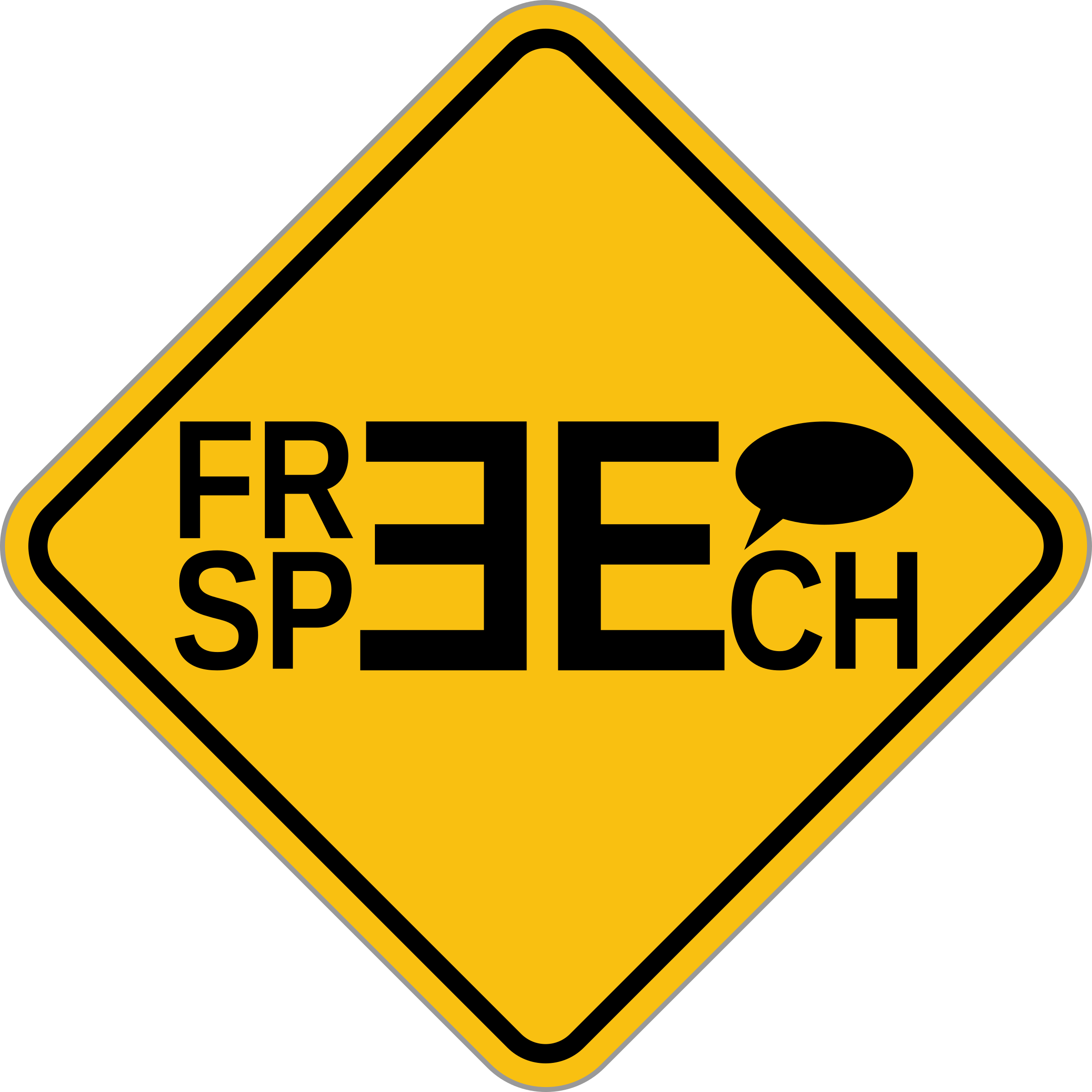
A "FREE SPEECH" yellow diamond caution sign design

Commonly heard references to a U.S. citizen's First Amendment rights aren't so widely understood as is often purported, especially in social media. Truth is, there is no full right to free speech, although it seems there might as well be.

Obscenity seems to be the primary question of free speech, rather than offense. Yet, one person's obscenity runs the risk of another person's taken offense. When does it matter?

That depends how a person is willing to look at a situation. A beginning point might be to consider whether something is obscene or offensive. Either way, it probably won't matter in any internet age . . . but that doesn't mean one should squash taken offense, necessarily. When offense it taken, consider it heartily.

It can be said that when an obscenity crosses personal lines, it can become terribly offensive. The Miller Test attempts to address such instances, without a lot of success. This is due to the usual trouble of restrictive and often dangerous community standards that would tend to hamper free will and free exercise. As it probably should be, it is of utmost difficulty to have something declared an actionable obscenity.

Mere obscenity is less threatening than directly offensive obscenity


Something that is obscene can exist without any personalized direction of offense to anyone. People and communities have worked to squash perceived obscenities, often to no avail because different people are affected in various ways by unrelated and unequal obscenities. This is why it can be difficult to prove any general offense to a degree of punishment, retribution or trial.

While an obscenity may be "shocking to a person's sense of what is moral or decent", but largely allowable in a free society, an offense can be a more serious matter; yet, equally difficult to answer effectively.


Today, there is the added difficulty of the Internet Age with which to contend. Where before a community might succeed in establishing its dominance over speech and behavior, today it's wholly unrealistic to expect that a community so large as the Internet should be able to level standards of conduct equally onto every worldly community in its realm. So, the Miller Test really doesn't stand much chance of working in a reliable way . . . demanding though it may be with its three-part requirement.

When obscenity is more then generally offensive


Still, obscenity can be a descriptive term as well, for obscene statements or actions that have intended targets (usually ideas, lifestyles and people). Such cases can sometimes be reasonably perceived as too much, especially when they incite negative, damaging behavior. Should it then be so difficult to identify offensive obscenities and have some legal recourse?

This is a question often [lightly] considered in social media. What do you think?